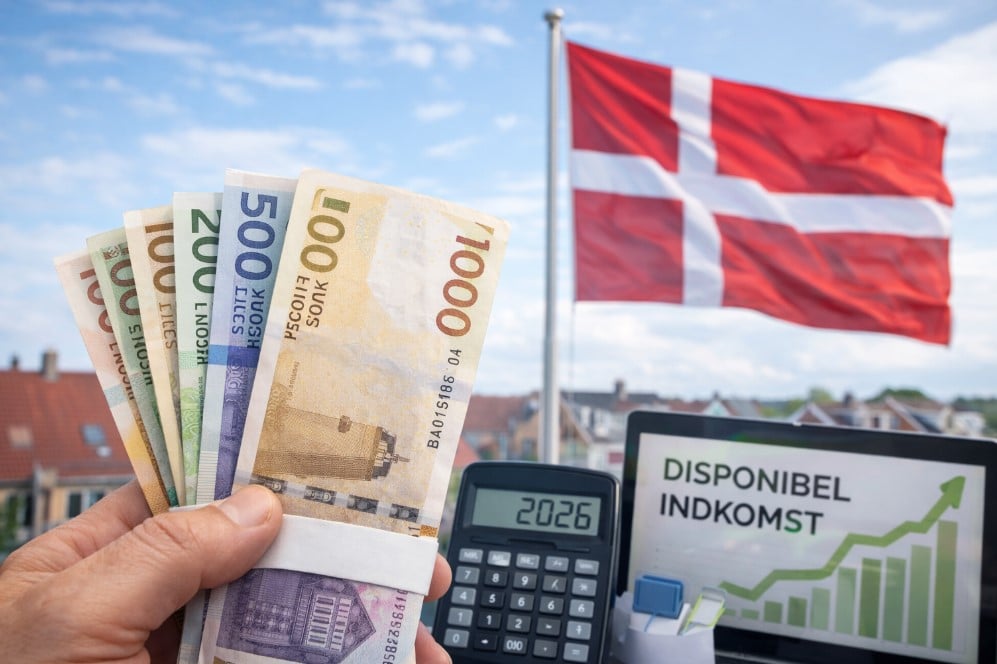
Following an expensive holiday season, many households are looking at their budgets with concern. However, upcoming fiscal changes are expected to provide significant financial relief. A series of adjustments to the tax system, scheduled to take full effect in 2026, will result in tax savings for the vast majority of wage earners.
Economists describe the upcoming changes as a “string of reliefs” designed to increase the amount of money Danes keep after taxes. While the specific impact varies depending on income level and family structure, the general trend points toward improved purchasing power. In addition to income tax adjustments, specific duties on consumer goods and utilities are being lowered or abolished.
Changes to Employment Deductions
One of the most broad-reaching changes involves the employment deduction (beskæftigelsesfradraget). While the terminology may seem technical, the impact is straightforward: wage earners will pay tax on a smaller portion of their income.
The reform increases the deduction rate from 12.3 percent to 12.7 percent. Furthermore, the maximum ceiling for this deduction is being raised from 55,600 DKK to 63,300 DKK. For those in the optimal income bracket to utilize the full deduction, this adjustment alone can result in an annual saving of nearly 2,000 DKK.
Adjustments are also being made to the personal deduction and the job deduction, contributing further to the overall tax reduction. These changes are processed automatically by the tax authorities, meaning taxpayers do not need to manually update their preliminary income assessments to benefit from the new rates.
Restructuring the Top Tax System
The tax bracket system is undergoing a significant structural change. Previously, the system primarily distinguished between standard tax and top tax. From 2026, the hierarchy will expand to include standard tax, middle tax, top tax, and a new “top-top tax.”
Both percentage rates and income thresholds are being adjusted. For individuals who paid top tax in 2025—based on an income threshold of 611,800 DKK—the new rules will likely result in savings. However, a new tier is being introduced for the highest earners. Individuals with an annual income exceeding three million DKK will face the new top-top tax.
Targeted Relief for Seniors
The reforms include specific provisions for the older segment of the workforce. Individuals who are five years or less away from the official state pension age will gain access to a new tax deduction.
This senior deduction is calculated as 8.5 percent of income, capped at a maximum of 37,000 DKK. If fully utilized, which requires an annual income of at least 435,000 DKK, this can reduce the tax bill by nearly 10,000 DKK.
It is noted that the extra employment deduction for seniors will take effect once the associated legislative proposal is formally adopted. This is expected to occur in April 2026, with retroactive effect from January 1, 2026.
Increases in Transfer Incomes
Wage earners are not the only group seeing financial adjustments. Most transfer incomes are set to receive a larger-than-usual increase. This adjustment is a delayed reaction to wage increases observed in the private sector over previous years.
State pension recipients will see the maximum benefit rate rise by 4.8 percent. According to calculations from Danica, this represents the largest increase in 16 years. Similarly, the rate for unemployment benefits (dagpenge) will increase by 4.5 percent. These adjustments help align transfer incomes with the general cost of living.
Reductions in Duties and Consumer Taxes
Beyond income tax, the cost of specific goods and services is set to decrease due to lower government duties. A notable change is the reduction of the electricity tax to near-zero levels, which can save families significant amounts depending on their energy consumption.
Starting July 1, duties on specific consumer goods such as coffee, candy, and chocolate will be removed. Additionally, the Value Added Tax (VAT) on books will be eliminated on the same date. The actual financial benefit for consumers regarding these goods depends on whether retailers pass the savings on to customers.
Financial Impact on Different Households
Calculations conducted by Nykredit illustrate how these changes affect the disposable income of various family types. The scenarios assume the households are homeowners. For those managing housing costs, understanding the interplay between taxes and disposable income is vital, similar to navigating mortgage loans in Denmark.
Single Households
For a single person with a low annual income of 300,000 DKK, the combined savings from tax cuts and electricity duty reductions amount to approximately 2,398 DKK per year. This equals roughly 200 DKK per month.
A single individual with a middle income of 450,000 DKK will see a larger benefit. The tax savings alone are estimated at 2,030 DKK, combined with electricity savings for a total annual boost of 4,030 DKK.
High-income earners (750,000 DKK annually) benefit significantly from the tax restructuring. Their total annual savings are estimated at 12,100 DKK, providing over 1,000 DKK extra per month. This increased liquidity can be useful for general budget management or paying off personal loans.
Couples and Families
A couple with a combined low income (two salaries of 300,000 DKK) will see a total annual saving of 4,797 DKK. While the tax portion is modest, the reduction in electricity duties plays a major role in their savings.
For a middle-income couple earning 450,000 DKK each, the savings increase to 8,061 DKK annually. This provides a monthly increase in disposable income of 672 DKK.
High-income couples (earning 750,000 DKK each) stand to gain the most from the reforms. Their combined annual savings are projected to be 24,201 DKK, translating to over 2,000 DKK extra per month.
Senior Households
Senior couples, defined as those within five years of pension age, receive the additional senior deduction. A low-income senior couple (300,000 DKK each) will save 16,604 DKK annually.
A middle-income senior couple sees the highest relative gain in these examples, with total annual savings of 25,779 DKK. This is largely due to the high value of the new senior tax deduction.
High-income senior couples will save approximately 24,201 DKK annually. While substantial, this is slightly less than the middle-income senior group due to the specific mechanics of the tax brackets.
These figures provide a baseline for what Danish households can expect as the new regulations come into force.